Does the frustration of a recurring clog have you looking for the most effective drain cleaning Chicago offers to restore your home? We identify the specific debris blocking your pipes and explain why professional mechanical removal is far superior to dangerous liquid drain openers. You will discover the exact steps to secure a long-term solution that prevents expensive emergencies and keeps your plumbing system running smoothly.
- The Usual Suspects: What’s Really Clogging Your Chicago Drains
- Your Options for Drain Cleaning: From First Aid to Major Surgery
- Decoding the Cost and Guarantees of Professional Drain Service
- Playing the Long Game: How to Prevent Future Drain Disasters
The Usual Suspects: What’s Really Clogging Your Chicago Drains
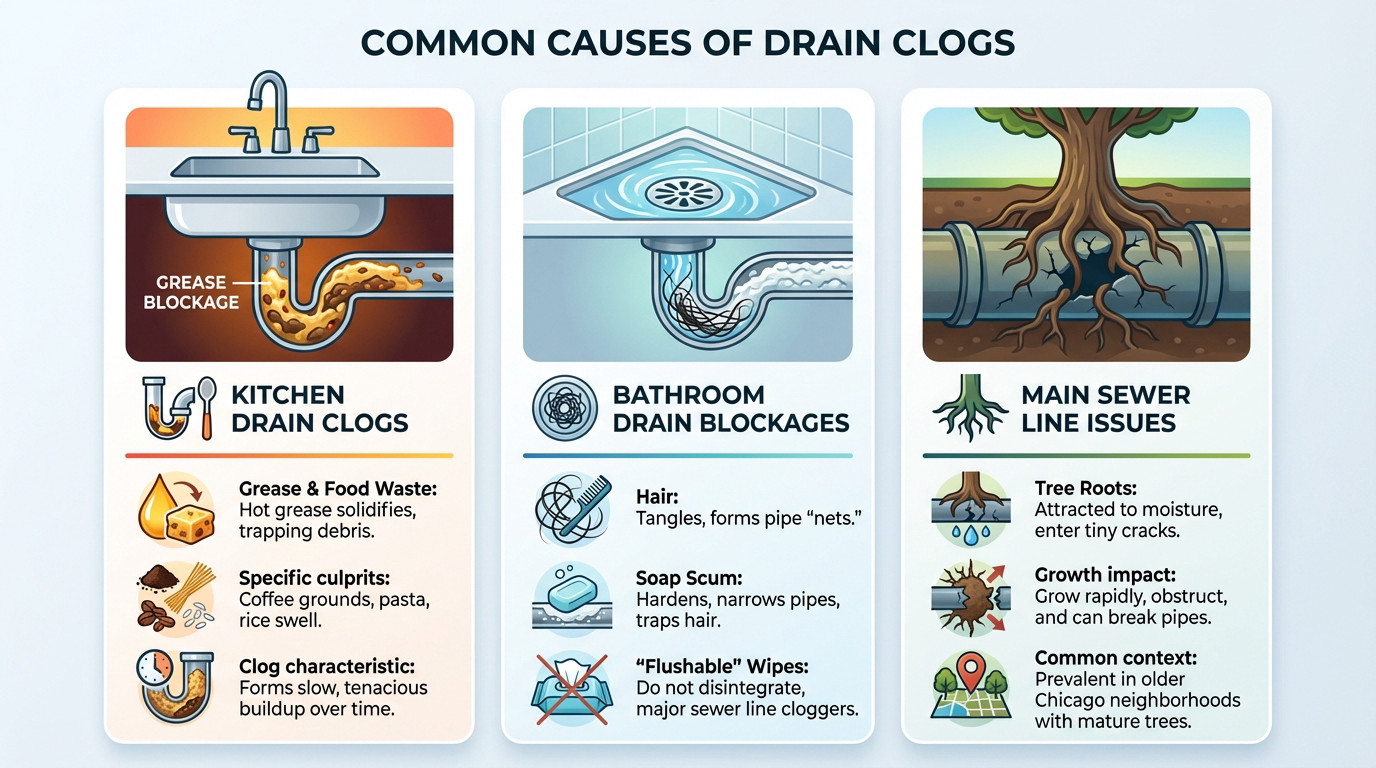
The Kitchen Sink’s Worst Enemy: Grease and Food Waste
You might think hot water washes everything away, but grease is actually the number one offender in Chicago kitchens. It pours down as a liquid but solidifies instantly in cold pipes, creating a sticky mess. This sludge traps food debris passing through.
Garbage disposals often give homeowners a false sense of security regarding waste. They simply can’t handle everything. Items like coffee grounds, pasta, and rice swell with water, creating a dense paste that blocks flow.
This blockage forms slowly over months. Eventually, that sludge becomes stubborn and refuses to budge.
Bathroom Blockages: Hair, Soap Scum, and “Flushable” Lies
Bathroom drains face a different, nasty mix of problems that stops water cold. Hair is the primary suspect here. Strands tangle together, forming tight nets that physically stop water from draining properly.
Then you have soap scum complicating the mess. This residue hardens on pipe walls, narrowing the diameter significantly. It acts like glue, grabbing passing hair and accelerating the clog formation.
Don’t believe the marketing hype on those “flushable” wipes. They simply do not disintegrate like toilet paper. These durable cloths are a massive cause of sewer blockages, regardless of what the box claims.
The Silent Invader: Tree Roots in Your Main Sewer Line
Tree roots pose a serious, invisible threat to your plumbing system. They constantly seek out moisture sources. Condensation on the outside of pipes attracts them. They infiltrate the system through even the tiniest cracks.
Once they breach the pipe, they grow rapidly inside. This growth obstructs flow and can eventually shatter the pipe. It is a frequent headache in older Chicago neighborhoods with mature trees that destroys your main sewer line.
Your Options for Drain Cleaning: From First Aid to Major Surgery
Now that you understand what is likely lurking inside your pipes, let’s look at what you can actually do about it.
The DIY Approach: What’s Safe and What’s a Waste of Time
For minor slow-downs, don’t overthink it. A standard plunger or a pot of boiling water often does the trick. It’s the logical first step before things get messy or expensive.
Here is where homeowners lose money. Store-bought chemical cleaners are a disaster for Chicago’s older plumbing infrastructure. They corrode metal, eat through gaskets, and barely touch the actual blockage. As a pro, I simply refuse to use them.
If the plunger fails, stop immediately. Forcing the issue only leads to catastrophic damage.
Professional Drain Snaking: The Classic First Response
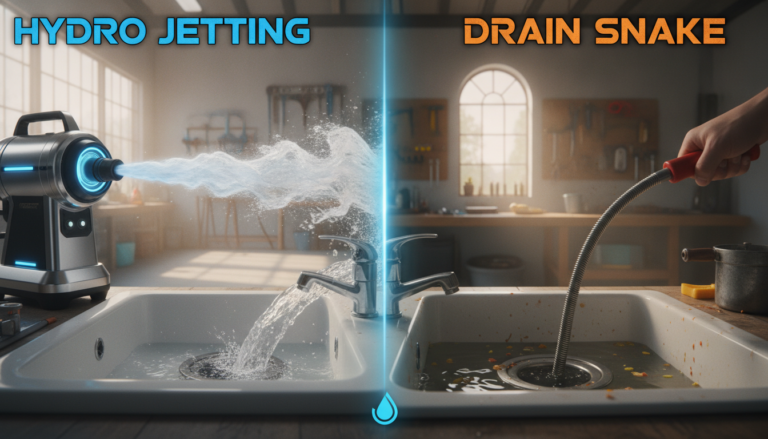
When the plunger fails, pros turn to drain snaking. It’s a flexible metal cable that physically enters the line to hook or break up the clog. For most bathroom sinks or tubs, this is the standard fix.
But here’s the catch most people miss. Snaking just punches a hole through the mess to restore flow. It doesn’t actually clean the pipe walls, meaning grease and sludge remain behind, inevitably causing another backup down the road.
When You Need the Heavy Artillery: Hydro Jetting
If you want the problem gone forever, you need hydro jetting. This isn’t just poking a hole; it uses water pressure up to 4,000 PSI to scour the pipe interior, pulverizing everything from sludge to tree roots.
This is the only method that restores pipes to a like-new condition, especially against stubborn grease. However, high pressure isn’t for every pipe. Knowing when to call a professional plumber ensures you get the right diagnosis before risking damage to fragile lines, saving you from a plumbing nightmare.
Decoding the Cost and Guarantees of Professional Drain Service
But let’s be honest, what you really care about is the cost and reliability of the service.
Beyond the $99 Special: What Really Determines the Price
Ignore the flashy “$99 drain cleaning” flyers. That teaser rate typically only covers a basic cable run through an accessible cleanout, often failing to address the nasty blockage deeper down.
The check you actually write depends on variables like clog severity. A simple sink fix might run $100-$200, while a main line excavation or hydro-jetting job pushes costs much higher.
Smart plumbers insist on a video camera inspection first. It stops the guessing game, ensuring you pay for the right fix immediately.
| Method | Best For… | What It Solves | Key Consideration |
|---|---|---|---|
| Professional Snaking (Rodding) | Simple clogs in kitchen/bathroom sinks. | Breaks up specific obstructions like hair or small food blockages. | A good first step, but doesn’t clean pipe walls. The clog might return. |
| Video Camera Inspection | Diagnosing recurring problems and checking pipe condition. | Identifies the root cause (grease, roots, broken pipe) before work begins. | Diagnostic cost that saves money long-term by preventing wrong fixes. |
| Hydro Jetting | Severe clogs, heavy grease, tree roots. | Completely cleans the entire pipe diameter, removing all buildup. | Expensive upfront, but the most thorough and long-lasting solution. |
Why a “Clog-Free” Guarantee Matters
Any handyman with a rented machine can poke a hole in a blockage, but that doesn’t mean it is fixed. A solid ““clog-free” guarantee proves a plumber stands behind their craftsmanship.
Here is the deal: if that same drain backs up again within a set window—usually 30 days—the crew returns to fix it at zero cost.
This warranty separates legitimate experts from guys just applying a temporary band-aid. It signals they resolved the root problem, guaranteeing that your plumbing system actually functions.
Playing the Long Game: How to Prevent Future Drain Disasters
Emergency services save the day, but never having to make that panicked call is far superior. Here is how you stay ahead of the problem.
Simple Habits to Keep Your Pipes Clear
Prevention beats a massive repair bill every single time. It remains the most effective form of drain cleaning in Chicago. A few minor shifts in your daily routine make a massive difference.
You do not need a plumbing license to defend your home against clogs. Adopting these specific behaviors will save you money and frustration:
- Scrape plates into the trash before rinsing. Never treat your drain like a garbage can.
- Never pour grease or oil down the sink. Pour it into a container and throw it away once it solidifies.
- Use drain strainers in all sinks and showers to catch hair and food particles.
- Run hot water for a minute after using the kitchen sink to help flush away any fresh grease.
The Case for Annual Professional Maintenance
Stop viewing annual check-ups as a sunk cost; treat them as a smart investment. For Chicago properties over a decade old, this is mandatory. Neglect invites chaos. It is a necessity, not a luxury.
This remains the only reliable way to know how to extend the life of your plumbing system. Preventive cleaning removes buildup early. You avoid turning minor grime into a bank-breaking emergency.
Homeowners who ignore this often face water damage that costs thousands, while those who schedule maintenance enjoy these advantages:
- Prevents surprise emergencies and costly water damage repairs.
- Improves water flow and drainage speed throughout the house.
- Eliminates foul odors caused by trapped, decaying waste in the pipes.
- Early detection of major issues like tree root intrusion or pipe damage.
Don’t let a minor clog escalate into a major plumbing disaster. Whether tackling stubborn grease or invasive tree roots, professional drain cleaning restores your home’s flow and peace of mind. Invest in regular maintenance today to avoid costly emergencies tomorrow. Your pipes—and your wallet—will thank you for the proactive care.
FAQ
What is the typical cost for professional drain cleaning in Chicago?
The cost for drain cleaning services in the Chicago area generally ranges between $100 and $600, depending on the severity of the blockage and the method required. For a standard kitchen or bathroom sink clog cleared with a professional snake, homeowners can expect to pay on the lower end of this spectrum, typically between $100 and $250. However, more complex issues involving the main sewer line or requiring advanced equipment like hydro jetting will usually fall into the higher price bracket.
It is important to be cautious of advertised “specials” that promise cleaning for extremely low prices, such as $99 or less. These offers often cover only basic access points and may not include the cost of labor for difficult clogs or necessary video camera inspections. The final price is determined by the location of the clog, the time required to resolve it, and whether the pipes need to be repaired or simply cleaned.
Why do plumbing experts advise against using chemical drain cleaners?
Professional plumbers strongly discourage the use of chemical drain cleaners because they are highly corrosive and can cause significant damage to your plumbing system. These harsh chemicals generate intense heat to dissolve blockages, which can warp plastic pipes or eat through older metal pipes found in many Chicago homes. This often leads to leaks and expensive pipe replacements that cost far more than a professional cleaning.
Furthermore, chemical cleaners rarely solve the underlying problem. They typically burn a small hole through the obstruction to restore flow temporarily, leaving the bulk of the grease or debris behind. This means the clog will inevitably return. For a safe and permanent solution, mechanical methods like snaking or hydro jetting are necessary to physically remove the blockage without harming the pipe infrastructure.
How frequently should household drains be professionally cleaned?
For most residential properties, scheduling a professional drain cleaning once a year is the recommended standard for preventative maintenance. This annual service acts as a safeguard, clearing out minor accumulations of grease, soap scum, and hair before they have the chance to harden into solid blockages. Regular maintenance ensures that water flows freely and helps eliminate unpleasant odors caused by decaying waste trapped in the pipes.
Annual cleaning is particularly critical for older homes or properties with large trees near the sewer lines. In these cases, tree roots can silently infiltrate the main line, causing severe backups if left unchecked. Routine maintenance allows professionals to spot these intrusions early and remove them, extending the lifespan of the entire plumbing system and preventing emergency situations.