Is there anything worse than watching dirty water rise in your sink instead of draining away? If you are dealing with a slow drain, finding expert drain cleaning minneapolis services is the only way to avoid a real plumbing disaster. We are sharing the professional secrets that prevent a simple clog from turning into a huge expense.
- When to Call for Drain Cleaning in Minneapolis
- Professional Methods: Beyond the Basic Snake
- Understanding the Cost of Drain Cleaning in Minneapolis
- Smart Maintenance to Prevent Future Drain Disasters
When to Call for Drain Cleaning in Minneapolis
The Tell-Tale Signs Your Drains Are in Trouble
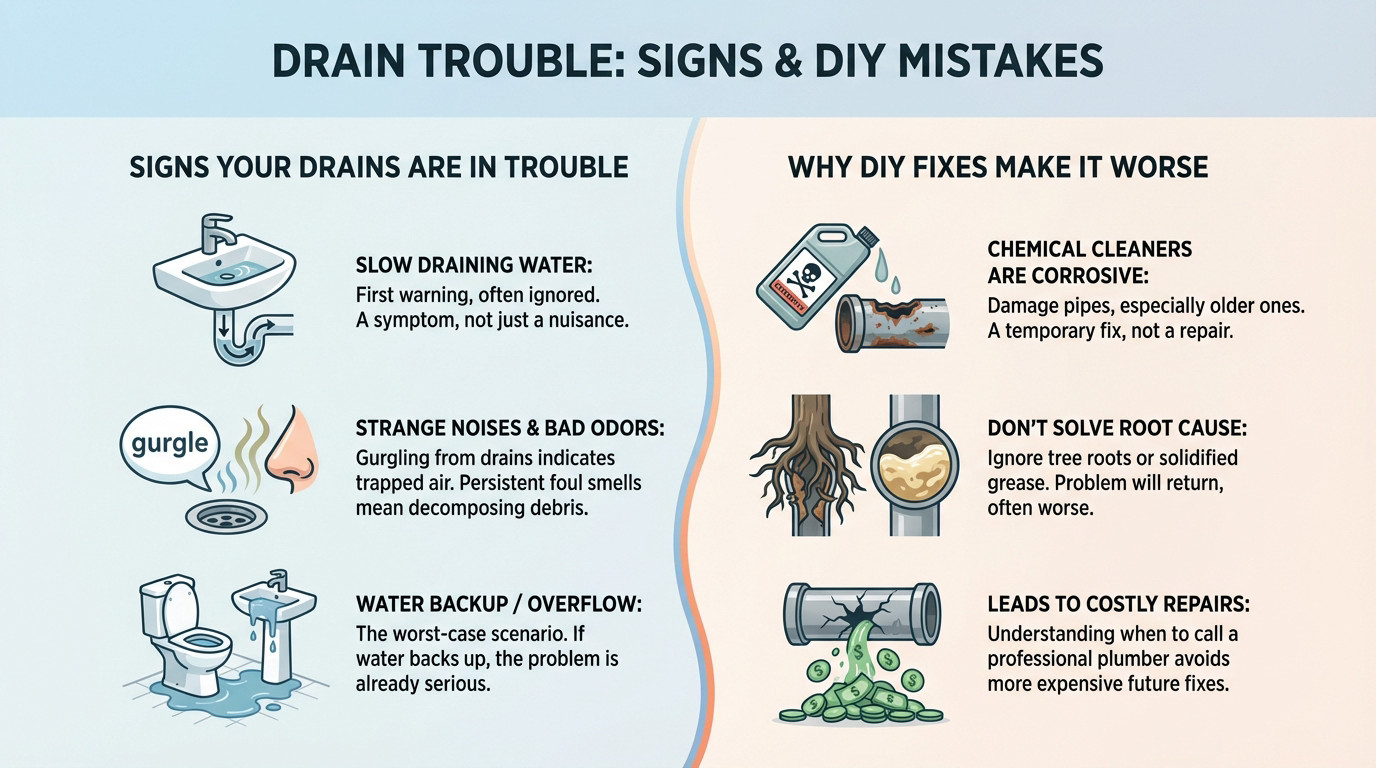
You notice the sink draining slowly. Most homeowners ignore this early warning. It isn’t just a nuisance; it is a clear symptom that something is blocking the flow.
Then come the weird noises. If your toilet gurgles, that’s trapped air fighting a developing clog. Don’t ignore persistent bad odors either; that stench is actually debris rotting right inside your pipes. It’s disgusting, but it’s a warning.
Finally, there is the nightmare scenario: sewage backup. If dirty water rises, the situation is already dangerous.
Why DIY Fixes Often Make Things Worse
Store-bought chemical cleaners are nasty stuff. They are highly corrosive and eat away at older Minneapolis pipes. They are just a temporary band-aid, never a real repair.
Pouring acid down the sink won’t stop tree roots seeking moisture or break up solidified grease. These products miss the real target. The blockage always returns, and usually, it comes back with a vengeance.
Knowing exactly when to call a professional plumber prevents a small issue from becoming a massive, wallet-draining disaster.
Professional Methods: Beyond the Basic Snake
So you know you have a problem. But what does a real professional actually do that you can’t? It isn’t just brute force. While DIY attempts might poke a hole in a clog, licensed technicians understand plumbing physics. We distinguish simple blockages from structural failures, avoiding the nightmare of a flooded basement.
The Right Tool for the Job: Snaking vs. Hydro Jetting
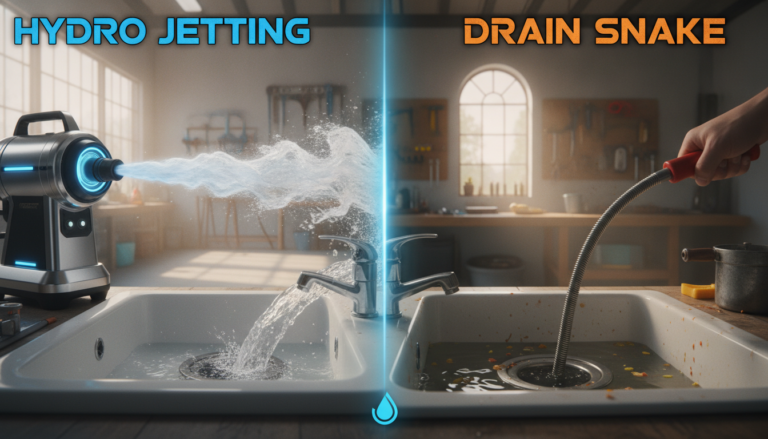
Traditional cabling, or snaking, acts like a mechanical corkscrew. It punches a direct path through obstructions effectively. This works best for localized, solid blockages like hair.
Then there is hydro jetting, a game-changer. It blasts high-pressure water to scour pipe walls clean. This removes stubborn grease, scale, and fine roots completely. It doesn’t just poke a hole; it restores flow.
A pro never picks a tool at random. The diagnosis dictates whether we cut or wash.
Seeing Is Believing: The Role of Camera Inspections
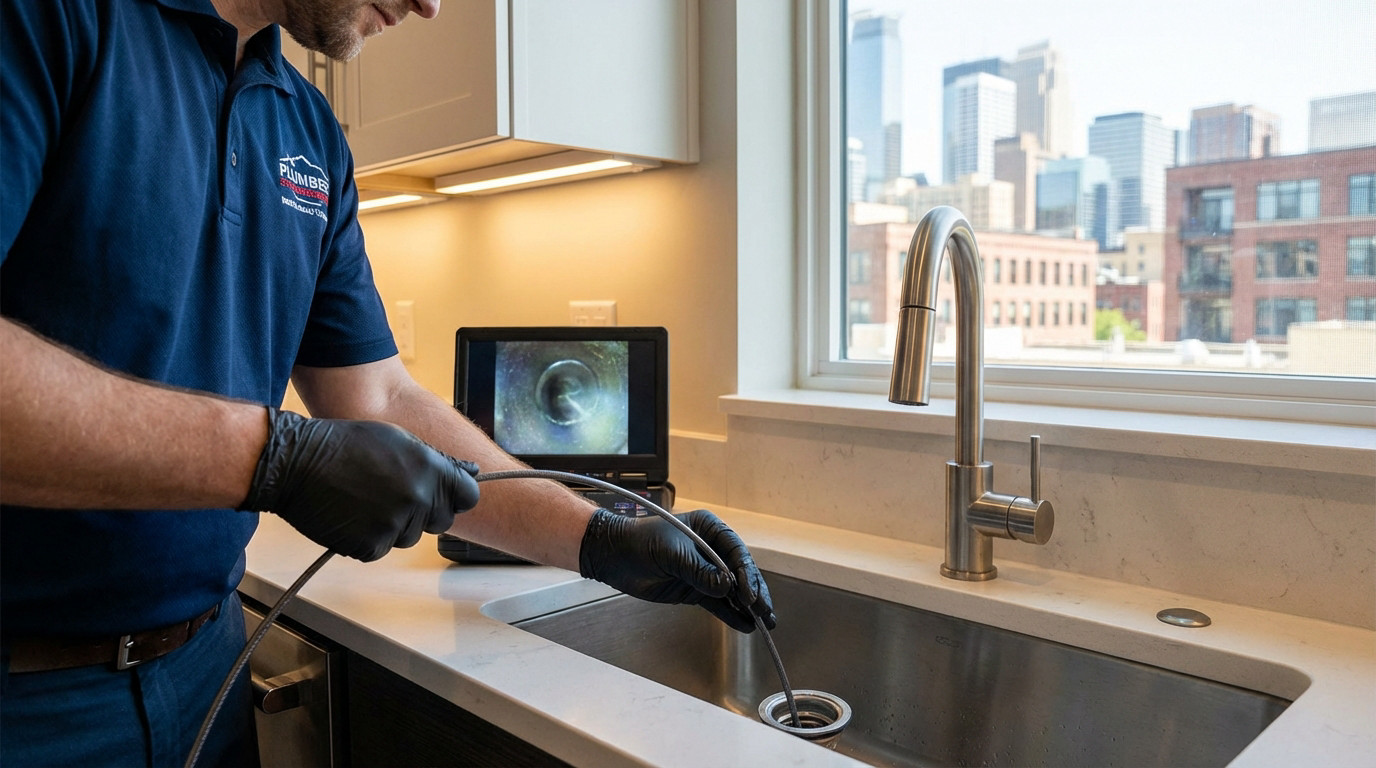
A video camera inspection eliminates the expensive guessing game. We feed a waterproof lens into the line to see the reality, giving you immediate visual proof.
The feed reveals cracked pipes or heavy root intrusion. This allows us to target repairs precisely without destroying your yard. We stop digging blindly.
However, cameras are useless in a flooded line. We must drain the water first.
- Tree root intrusion from mature city trees.
- Grease and fat buildup from kitchen sinks.
- Pipe scale and mineral deposits.
- Misaligned or collapsed pipe sections.
Understanding the Cost of Drain Cleaning in Minneapolis
Advanced tools sound pricey. Let’s break down the real cost of a drain cleaning service in Minneapolis.
What Influences the Final Bill
Pricing isn’t fixed. It depends on location—a sink clog differs vastly from a main sewer line blockage. Severity and pipe accessibility also drive the final cost.
Technology matters too. A simple mechanical snake costs less than thorough hydro jetting. Naturally, weekend emergency calls will increase the rate.
| Service Type | Typical Method | Key Cost Factors |
|---|---|---|
| Kitchen/Bathroom Drain | Mechanical Snake/Auger | Blockage severity, simple access point |
| Main Sewer Line | Hydro Jetting / Camera Inspection | Tree roots, pipe damage, heavy grease |
| Commercial/Industrial Line | High-Power Hydro Jetting | Pipe diameter, length, 24/7 emergency call |
| Estimates for interior drains can start around $189, while main line cleanouts often begin near $249. These are starting points and vary based on the factors above. | ||
Paying for Expertise, Not Just a Service
You aren’t just buying labor; you’re buying know-how. A veteran navigates tricky pipe bends without cracking them, avoiding disasters a rookie might cause.
Consider this: an honest pro might fix your issue for under $300, while others push unnecessary $20,000 repairs. You are paying for an accurate diagnosis.
The goal is fixing the mess, not selling expensive add-ons. That is the real value.
Smart Maintenance to Prevent Future Drain Disasters
Fixing a clog is one thing. Making sure it doesn’t happen again.
Why Regular Maintenance Is Not Overkill
Think of preventive maintenance like a mandatory dentist visit for your pipes. In Minneapolis, where mature trees line the streets, roots are constantly hunting for water in your conduite principale. Ignoring this threat guarantees a nasty backup eventually. It is far cheaper to clean now than replace later.
For commercial and industrial spots, the stakes are much higher. A clogged drain in a restaurant or factory means lost business instantly. Regular cleaning acts as cheap insurance against shutting down operations. Don’t let a simple grease clog kill your revenue.
Easy Habits to Protect Your Plumbing System
You don’t need a degree to keep things flowing. Treating your drains with basic respect prevents most nasty disasters. It really isn’t rocket science, just simple daily awareness.
Adopting a few smart habits will dramatically extend the life of your plumbing system. You avoid the stress of expensive emergency calls. Prevention is always less painful than a flooded basement.
If you are unsure about a maintenance plan, contact us for a professional evaluation. We spot trouble before it starts.
- Your Drains Are Not a Trash Can:
- Never pour grease or oil down the kitchen sink.
- Only flush human waste and toilet paper. No ‘flushable’ wipes.
- Use a drain strainer in showers and tubs to catch hair.
- Avoid putting coffee grounds or fibrous food waste in the garbage disposal.
Don’t let a simple clog turn into a plumbing nightmare. Whether it’s tree roots or grease, you need a Minneapolis pro to handle the dirty work. Skip the chemical cleaners and call for expert help today. Your pipes—and your wallet—will thank you for making the smart choice.
FAQ
How much does it typically cost to clean a clogged drain in Minneapolis?
Let’s talk numbers, because nobody likes surprises. For a standard interior drain—think kitchen sinks or bathroom tubs—prices in the Twin Cities often start around $189. If we are talking about the big guys, like your main sewer line, you are likely looking at a starting point closer to $249.
Keep in mind, these are just starting points. If we run into a massive tree root invasion or if you need us on a Sunday night, the price tag will shift. The accessibility of your cleanout and the severity of the blockage play a huge role in the final bill.
Why do plumbers warn against using store-bought drain cleaners?
Honestly? Because that stuff is bad news for your plumbing. Those harsh chemicals rely on heat and corrosion to eat through gunk, but they don’t know when to stop. They can eat right through your pipes, especially if you live in an older Minneapolis home with vintage cast iron or galvanized steel lines.
Plus, they are just a band-aid. Pouring chemicals down the sink might poke a small hole in the clog to let water pass for a few days, but it won’t remove the grease buildup or tree roots causing the real trouble. You end up with a damaged pipe and the same clog a week later.
Is professional drain cleaning actually worth the money?
Absolutely, and here is why: we fix the problem, we don’t just poke at it. When you hire a pro, you aren’t just paying for a guy with a wrench; you are paying for advanced gear like hydro-jetters that blast away years of grease and scale, and cameras that show us exactly what is going on underground.
Think of it as an investment. Spending a few hundred bucks now to clear a line properly is a whole lot cheaper than spending $20,000 later to dig up your front yard because a neglected pipe collapsed. We save you from the nightmare scenarios.
How can I tell if the clog is deep down in the main line?
Your house will usually tell you if something is wrong deep in the system. The biggest giveaway is when plumbing fixtures start acting weird together. If you flush the toilet and water gurgles up in the shower, or if running the washing machine causes the kitchen sink to back up, you have a main line issue.
Another red flag is water showing up in the lowest part of your home, like the basement floor drain. Since the main line carries all your home’s wastewater out to the city sewer, a block there forces water to find the nearest exit point—which is usually your basement.
Can I just use baking soda and vinegar to unclog my drain?
Save the baking soda for your cookies and the vinegar for your salad. While mixing them creates a fun fizzing reaction that looks like a science fair volcano, it lacks the muscle to move a real clog. It might shift a little bit of loose soap scum, but that is about it.
If you are dealing with solid grease, hairballs, or tree roots—which are super common here in Minneapolis—that fizzy mixture won’t do a thing. You need mechanical force or high-pressure water to physically remove those obstacles.
Can I unclog a drain myself with a rented snake?
You can try, but it is a bit of a gamble. The hand-cranked snakes you buy at the hardware store are usually too short to reach the real problem, and renting a big machine can be dangerous if you don’t know how to handle the recoil. We have seen plenty of homeowners hurt themselves or crack their porcelain toilets trying to muscle a cable through.
Also, without a camera inspection, you are flying blind. You might punch a hole through a clog, but if that clog was caused by a collapsed pipe or invasive roots, your snake might actually make the damage worse. Sometimes, DIY turns a small repair into a major replacement.