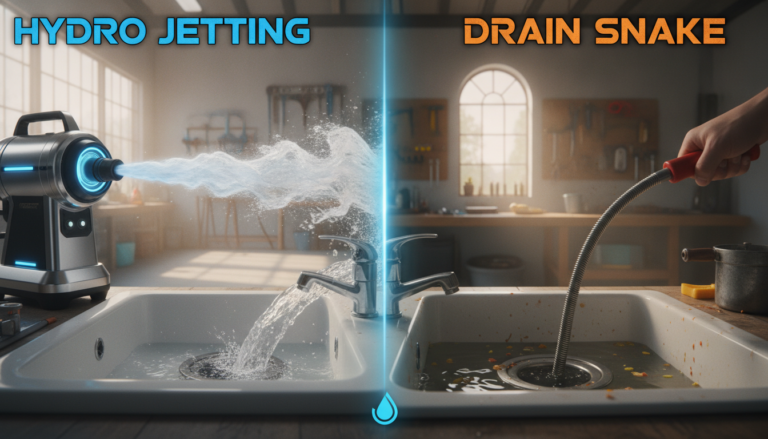
Kitchen drains are often the first victims of blockages. Grease, food scraps and other debris can quickly build up and create drainage problems. Not only does this lead to unpleasant odors, it can also cause costly water damage. Here are some simple and effective tips for maintaining your kitchen drains and avoiding daily hassles.
Why maintain your kitchen drains?
Kitchen drains are constantly exposed to food residues, grease, soap scum and other debris, which can solidify and cause blockages. When water no longer drains properly, it can lead to a build-up of unpleasant odors and, in some cases, water damage.
- Food remains stagnating in the pipes can lead to unpleasant odors in your kitchen.
- Prolonged blockages can lead to leaks and even water damage to walls and floors.
- Grease, food residues and other debris can quickly block your pipes, slowing the flow of water.
Regular maintenance of your drains prevents these problems and extends the life of your installations.
Practical tips for maintaining your kitchen drains
There are simple, effective solutions for maintaining your drains. Here are some practical tips to keep your drains in tip-top condition and avoid the hassle of clogs and unpleasant odours.
- Use baking soda and vinegar
One of the simplest and most environmentally-friendly solutions for maintaining your drains is to use baking soda and vinegar. Here’s how:
- pour half a cup of baking soda down the drain;
- then add half a cup of white vinegar;
- cover the drain and leave for about 30 minutes;
- rinse with hot water to remove any residue.
This method acts as a natural deodorizer and helps break down grease and food residues that can clog pipes.
- Opt for commercial solutions
If you’re dealing with more serious clogs or heavy build-up, it may be necessary to resort to commercially available cleaning chemicals. These products are formulated to dissolve grease and other debris more effectively. Use them with care and according to the manufacturer’s instructions to avoid damage to your pipes.
Read also : Best drain cleaner unclog: which one should you buy?
- Cleaning traps
Traps under the sink can accumulate grease and food residues. We recommend cleaning them once a month to avoid blockages. To do this, follow these steps:
- unscrew the trap and empty it into a bucket;
- clean it with a brush and hot, soapy water
- rinse thoroughly and refit.
- Use boiling water
For quick and easy maintenance, boiling water is an effective way of dissolving grease build-up in your pipes. Slowly pour boiling water down your drain once a week to help prevent blockages. This works particularly well for drains with grease residues from cooking.
- Preventing blockages
Regular prevention is important to avoid blockages. Here are a few good habits to adopt:
- Never pour grease or oil down the drain. They can solidify and clog your pipes.
- Install a drain filter to catch food residues before they go down the drain.
- Avoid throwing food scraps down the drain, especially fibrous substances such as vegetable skins or eggshells.
- Maintain your drains regularly
Spend a few minutes each month maintaining your drains. This will reduce the risk of blockages and ensure proper drainage. Preventive maintenance is always more economical and simpler than repairs after a major problem has arisen.
Read also : How to protect your pipes from frost in winter?
Regular maintenance of your kitchen drains ensures that they work properly and prevents blockages. By adopting simple gestures, such as using baking soda and vinegar, or cleaning traps, you’ll extend the life of your installations. Take good care of your drains, and you’ll avoid costly repairs and inconvenience. For optimum maintenance, don’t forget to prevent blockages by adopting good daily practices. And if the problem persists, call in a professional