Is there anything worse than watching dirty water rise in your sink while you desperately look for the best drain cleaning seattle has to offer? We know that constant clogs and foul smells are a major headache, particularly with our local mix of old pipes, heavy rain, and aggressive tree roots. You are about to discover the specific DIY tricks that actually work and the expert secrets to banishing those stubborn blockages for good before they unexpectedly cost you a small fortune.
- Why Your Seattle Drains Are Constantly Clogging
- The DIY Approach: What You Can (and Can’t) Fix Yourself
- Professional Drain Cleaning: What the Experts Actually Do
- Preventing Future Disasters: A Proactive Approach to Drain Health
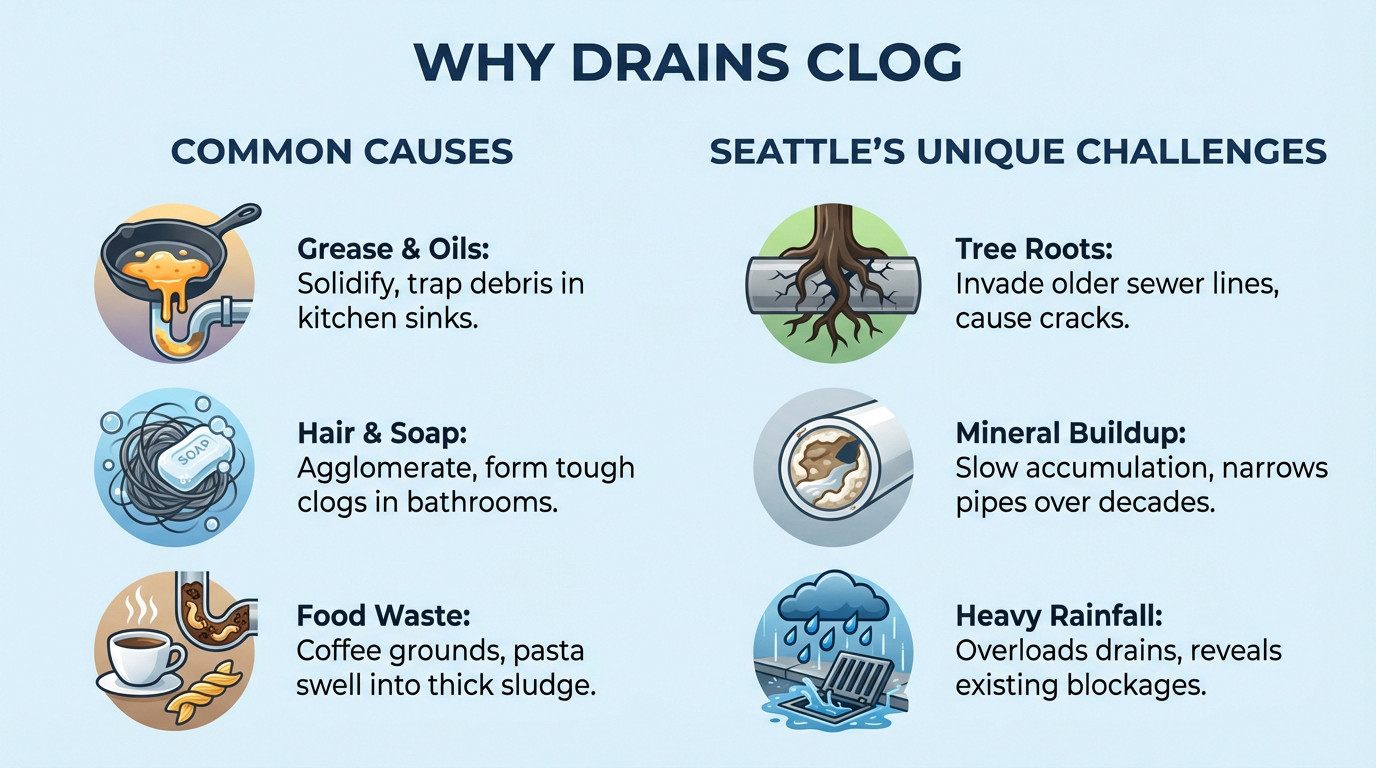
Why Your Seattle Drains Are Constantly Clogging
 The DIY Approach: What You Can (and Can’t) Fix Yourself
Now that you understand the likely causes, the real question is: can you handle the fix yourself?
Simple Fixes for Minor Clogs
Not every slow drain demands a checkbook. Before dumping harsh chemicals that might damage your pipes, try these basic tools to clear surface debris.
- The Plunger: Technique is key. For sinks, seal the overflow with a wet rag. For toilets, use sharp upward pulls to dislodge the blockage effectively.
- Boiling Water & Vinegar: This is your best defense against grease. Pour boiling water, then baking soda and vinegar. Let the mixture fizz for 30 minutes to break down sludge.
- Manual Removal: Gross but effective. Shower drains often hold hairballs right at the entrance. You can usually fish these out with a bent wire hanger.
When to Step Away and Call for Help
Stubbornness costs money. Forcing a DIY fix on a major blockage can cause expensive damage. Knowing when to call a professional plumber for drain cleaning is vital to protect your home.
Stop immediately and call an expert if you see these warning signs:
- Multiple Clogged Drains: If the toilet and shower back up simultaneously, the blockage is likely deep in your main sewer line.
- Recurring Clogs: If a drain clogs repeatedly despite your efforts, you are facing structural issues or root intrusion.
- Foul Odors: Persistent sewage smells suggest dangerous gas is escaping, signaling a line break or venting failure.
- Gurgling Sounds: If your sink bubbles when you flush, your system is gasping for air due to a main line obstruction.
Professional Drain Cleaning: What the Experts Actually Do
But what happens when you make that call? A professional service isn’t just a guy with a bigger plunger; they bring specialized gear.
Beyond the Snake: Camera Inspections and Hydro Jetting
Real pros don’t guess. They use a video camera inspection to see exactly what’s wrong, whether it’s tree roots or grease. This diagnostic step prevents wasting money on guesses.
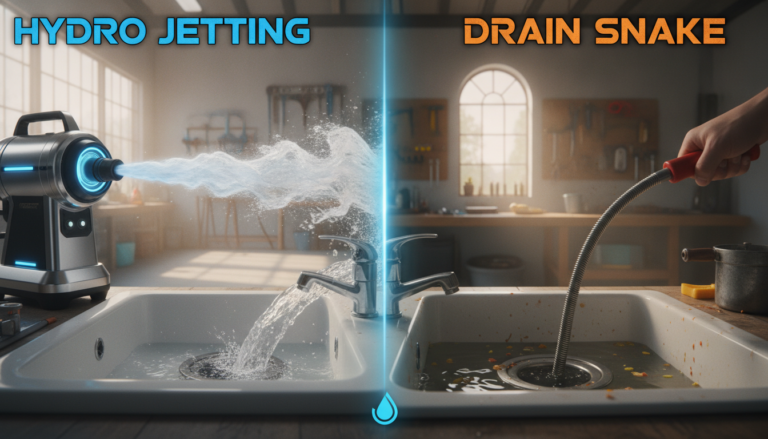
Next is the classic plumber’s snake. It effectively punches a hole through a blockage to restore flow, but it rarely cleans pipe walls completely.
Then there is the heavy artillery: hydro jetting. This blasts high-pressure water to scour interior surfaces, removing everything and restoring pipes to near-original condition.
Comparing Professional Methods: What’s Right for Your Problem?
Choosing the right tool depends on the situation. A simple hair clog doesn’t require the same artillery as a sewer infested with roots.
Many homeowners waste money snaking problems that demand high pressure. If you ignore the buildup, it just clogs again. Here is the breakdown of the right method for your disaster.
| Method | Best For | How it Works | Outcome |
|---|---|---|---|
| Drain Snake | Simple clogs (hair, small objects) | A rotating cable physically breaks up or retrieves the blockage. | Good for immediate relief, but may not clear all residue. |
| Hydro Jetting | Heavy grease, tree roots, extensive buildup | High-pressure water jets scour the entire pipe diameter. | Thoroughly cleans the pipe, longer-lasting solution. |
| Camera Inspection | Diagnosing unknown or recurring issues | A waterproof camera is fed into the pipe. | Pinpoints the exact location and cause of the problem. |
Preventing Future Disasters: A Proactive Approach to Drain Health
Unclogging a pipe is one thing. Making sure the problem doesn’t come back is a whole other challenge.
Building Smart Habits for Healthy Pipes
You don’t need a plumbing license to keep things flowing smoothly. Honestly, it just comes down to watching what you toss in the sink. Prevention isn’t magic; it’s daily awareness.
Most folks ruin their pipes by treating them like trash cans, but you can avoid that mess. Don’t fall into that trap.
- Never pour grease or oil down the sink. Pour them into a container and toss it in the trash.
- Use drain strainers in showers and kitchen sinks to catch hair and food scraps.
- Only flush toilet paper and human waste. “Flushable” wipes are a leading cause of sewer backups.
- Run hot water for a minute after using the garbage disposal to help flush debris through.
The Value of Regular Maintenance
Waiting for a blockage is a rookie mistake. Emergency calls are stressful, expensive, and happen at the worst times. Why deal with the panic when you can plan ahead? That’s where proper drain maintenance makes total sense.
You really should get on a schedule. If you have old pipes or aggressive tree roots, book a pro cleaning every year or two. It stops minor issues from becoming major failures.
Think of this as an investment, not just a cost. It protects your home’s value over the long haul. Plus, the peace of mind you get is absolutely priceless.
Dealing with stubborn drains doesn’t have to be a nightmare. While a plunger handles minor messes, knowing when to call the pros saves you major headaches. Stick to smart habits, schedule regular maintenance, and keep your plumbing flowing smoothly. Your home—and your sanity—deserve that peace of mind
FAQ
How much does a professional drain cleaning usually cost?
Honest answer? It depends on what we find down there. A simple kitchen sink clog is going to cost a lot less than clearing invasive tree roots out of your main sewer line. While we can’t give you a magic number without seeing the problem, investing in a professional clean now is always cheaper than fixing a burst pipe or dealing with major water damage later.
Why do you guys hate chemical drain cleaners so much?
We hate them because they are dangerous for you and your pipes. Those store-bought bottles are filled with harsh chemicals like caustic soda that can cause serious burns or even blindness if they splash back. Worse yet, they can actually eat away at your plumbing, turning a simple clog into a massive, expensive repair job. It’s just not worth the risk.
Is professional drain cleaning really worth the money?
Absolutely, and here is why: we don’t just poke a hole in the blockage; we actually clean the pipe. With tools like camera inspections and hydro jetting, we can see exactly what’s wrong—whether it’s grease, tree roots, or a toy car—and remove it completely. You get a long-term solution that fails a week later.
Can I try to unclog the drain myself first?
You sure can. For minor backups, a good old-fashioned plunger or a mix of baking soda, vinegar, and boiling water works wonders on grease and soap scum. But if you’ve tried plunging for 20 minutes with no luck, or if multiple drains are backing up at once, that’s your cue to stop and call us before things get messy.